





🤎About Australian Shepherds
Australian Shepherds are intelligent, connected, active dogs with some wonderfully unique breed traits. Here you’ll find quick answers to common questions about living with an Aussie, registration, coats and other characteristics of the breed.
Standard Australian Shepherds→ HERE
1. Are Australian Shepherds good with kids?
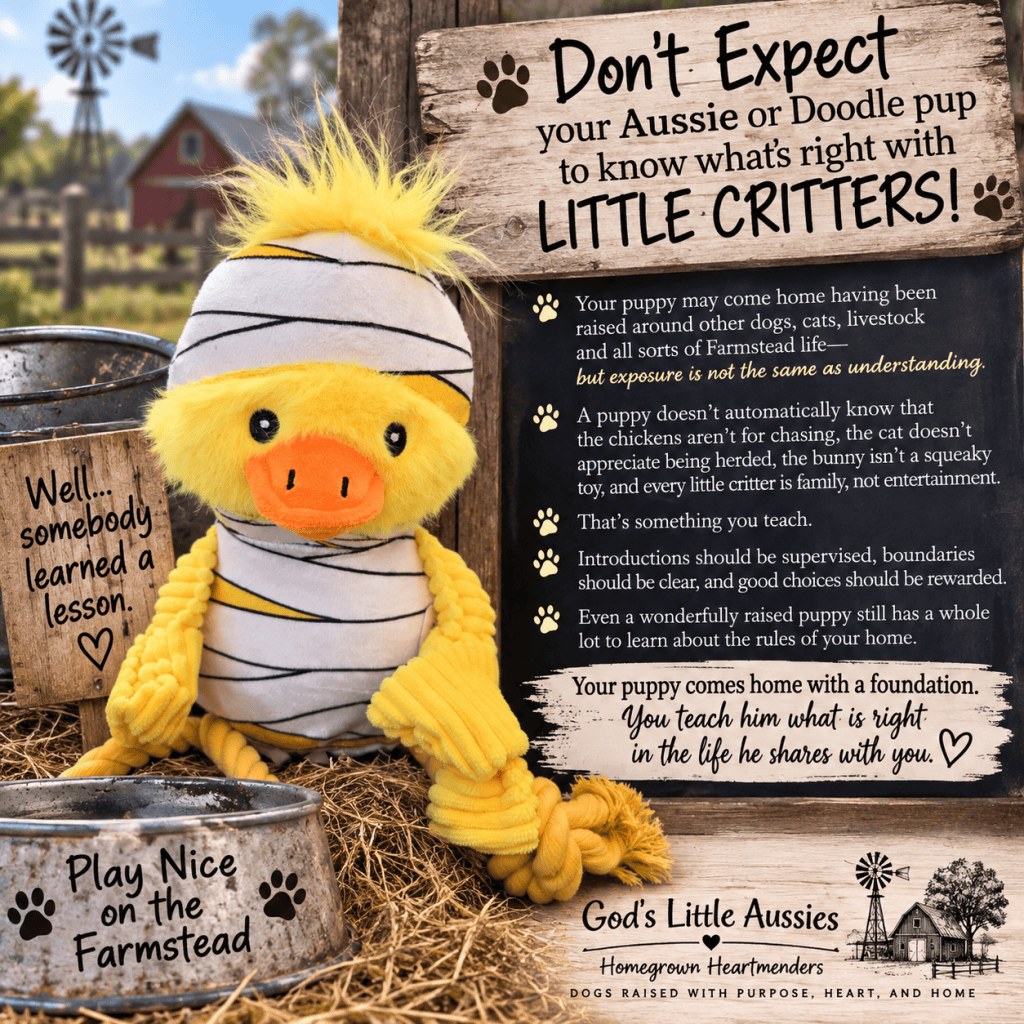
They certainly can be. Aussies are typically devoted, playful and highly connected to their families. Because they are a herding breed, some may naturally try to herd or nip at moving children, making appropriate supervision, boundaries and training important.
Puppy & Child Safety→ HERE
Learn more about Our Temperament Philosophy → HERE
2. Are Australian Shepherds good for first-time dog owners?
They can be a wonderful first dog for a family prepared for their intelligence, energy and natural herding instincts. We intentionally breed toward lower-to-medium drive Aussies with an off-switch because our puppies are being raised primarily for family homes.
Visit for more info →HERE
Learn more about Our Temperament Philosophy →HERE
3. Why do Aussies still nip and herd the kids?
Aussies tend to learn quickly, notice everything and sometimes develop their own ideas about how something should be done. Consistent, positive training and a good relationship go a long way with this breed.
Puppy & Child Safety → HERE
4. How can I help prevent herding behavior in my Aussie?
Herding is instinctive, so the goal isn’t to erase what makes an Aussie an Aussie. Early training can help redirect inappropriate chasing, nipping and herding toward behaviors that work better in family life.
Learn more about Our Temperament Philosophy →HERE
Learn more about What Does “Low-to-Medium Drive” Mean in an Australian Shepherd?→ HERE
5. Are your parent dogs registered?
Yes. Our Australian Shepherd breeding dogs are registered through the registries appropriate to their size and lineage. Registration is one piece of the information we consider when making breeding decisions; health, temperament, structure, development and the individual dog matter as well.
6. Should I shave my Aussie’s coat?
Generally, no. Australian Shepherds have a double coat that provides insulation and protection in both warm and cool weather. Regular brushing and appropriate grooming are usually preferable to shaving the coat.
7. What is an Aussie’s coat like?
Australian Shepherds have a double coat and they shed. Coat length, density and amount of feathering vary considerably between individual dogs. We intentionally prefer moderate to lighter coats that retain the beautiful Aussie look while being a little more practical for everyday family life.
Learn more about Why We Choose Moderate Coats →HERE
8. Why do you leave tails?
You can learn why → HERE
9. What are the Aussie coat colors?
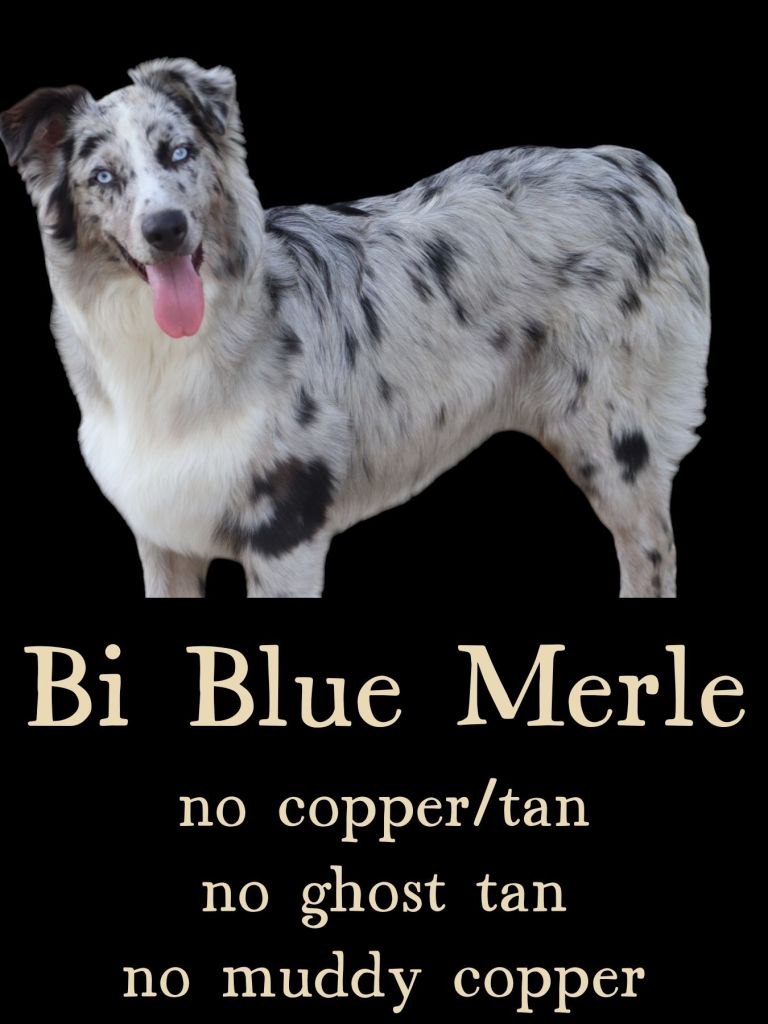
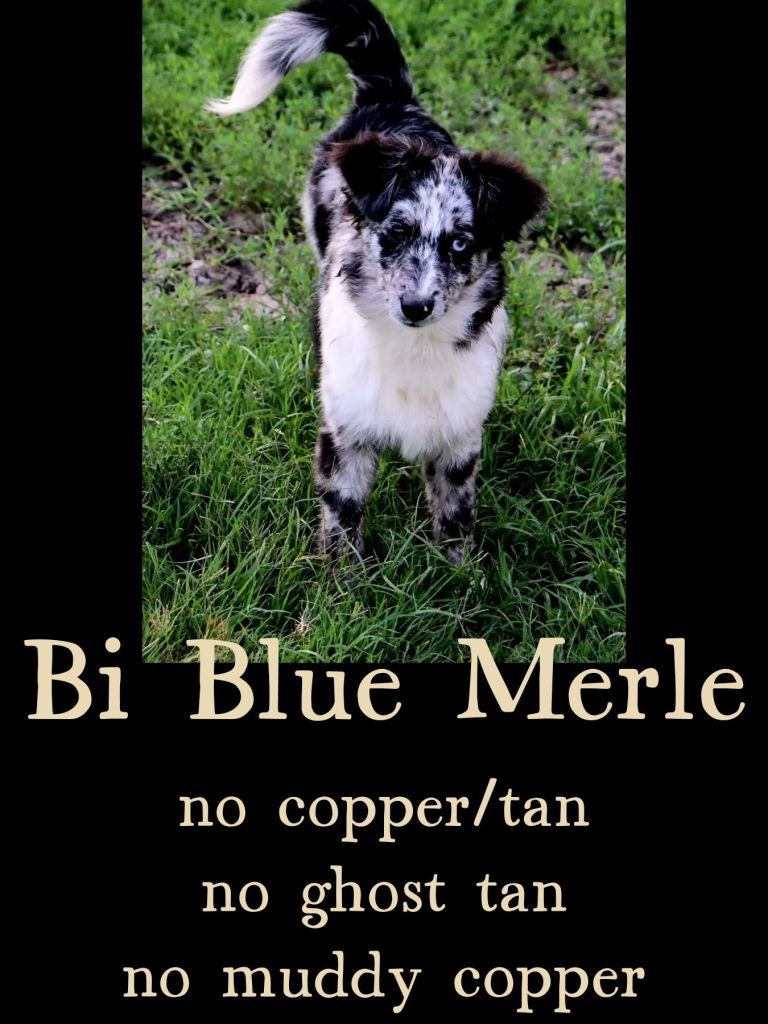
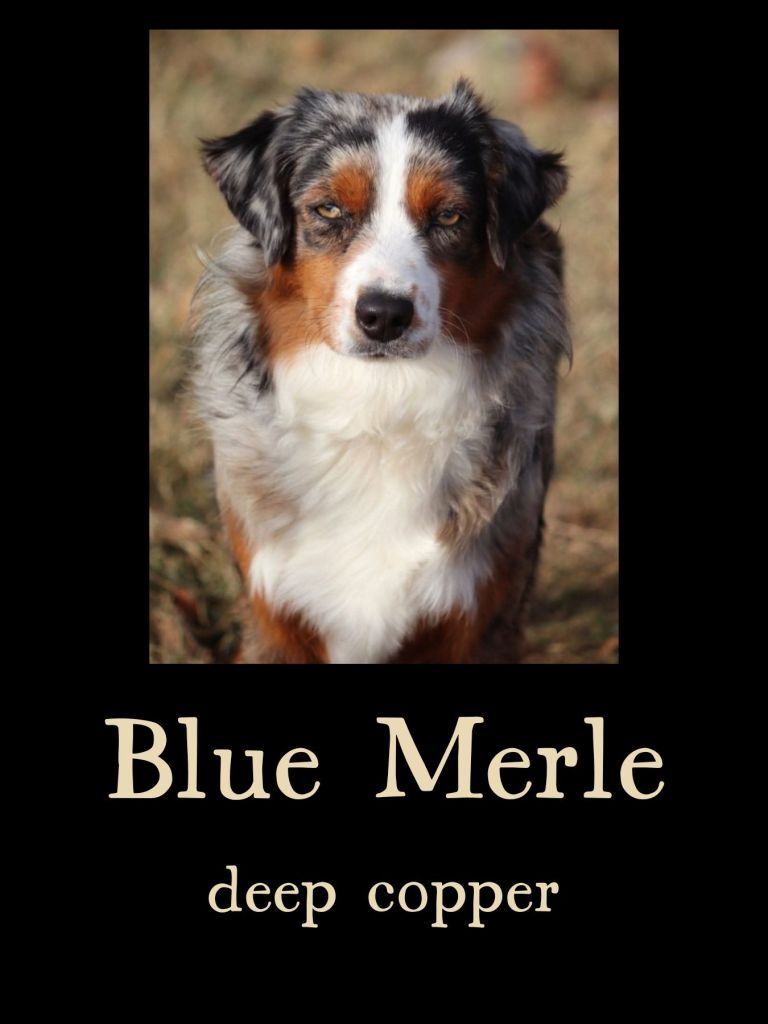
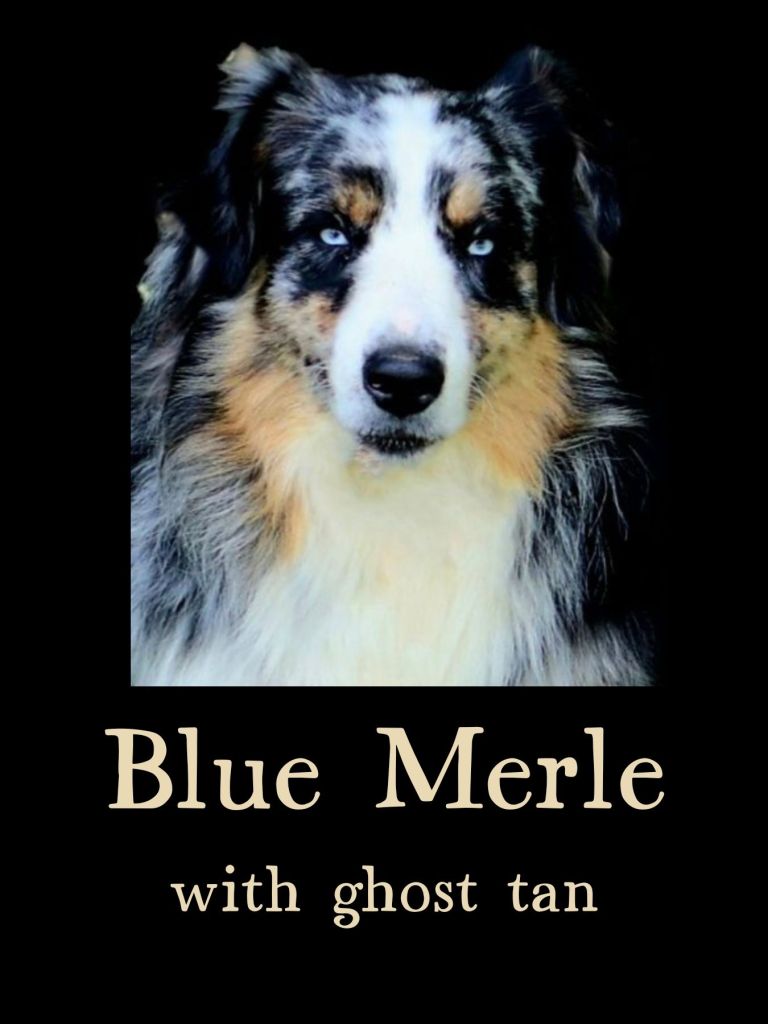
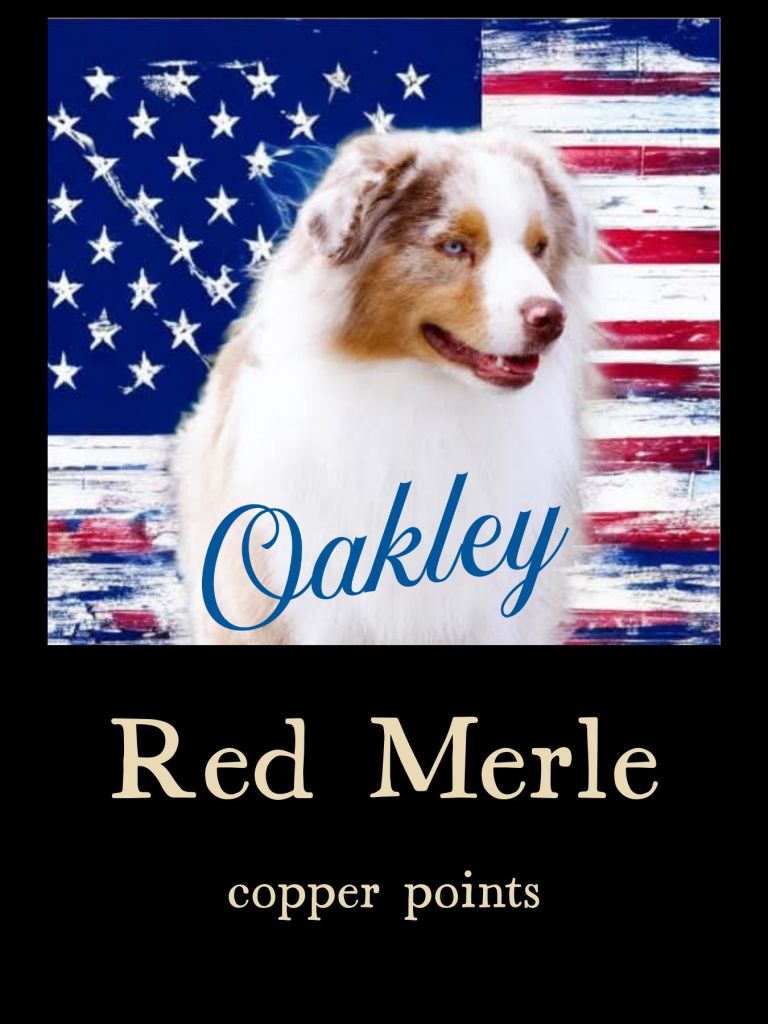
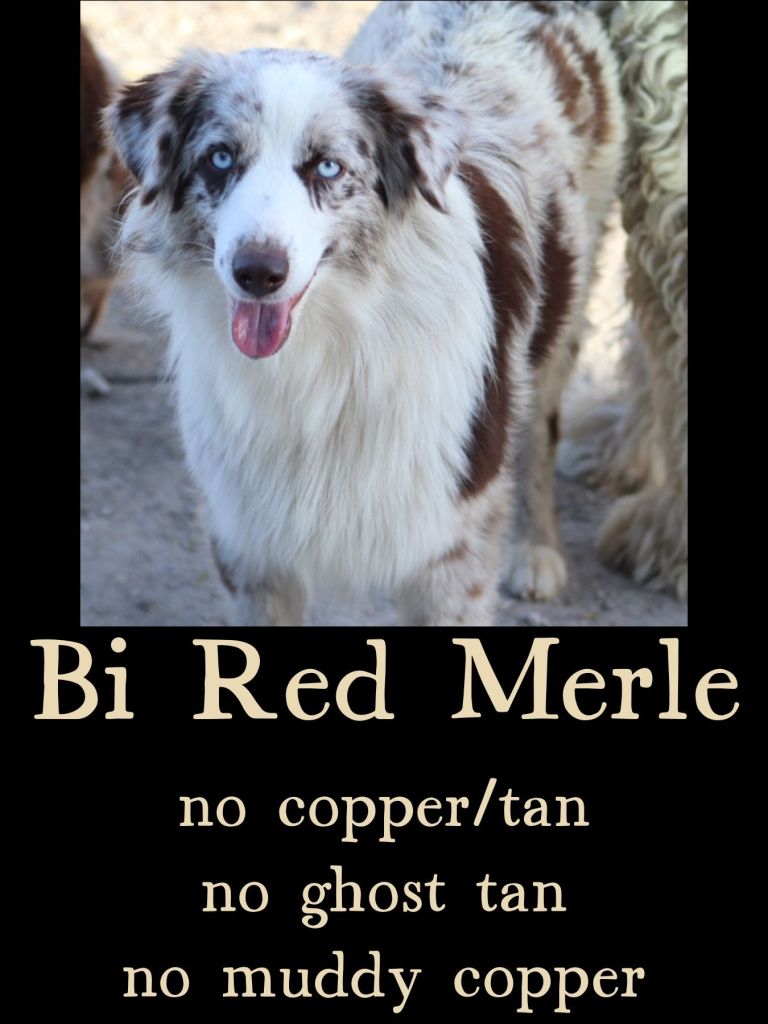
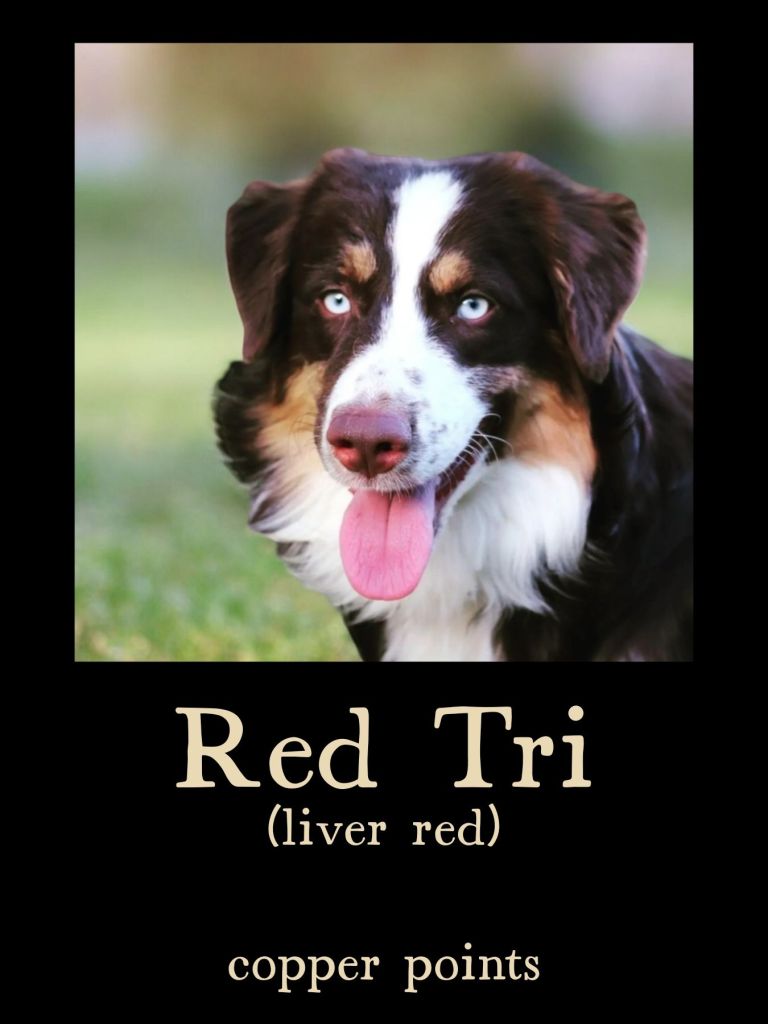
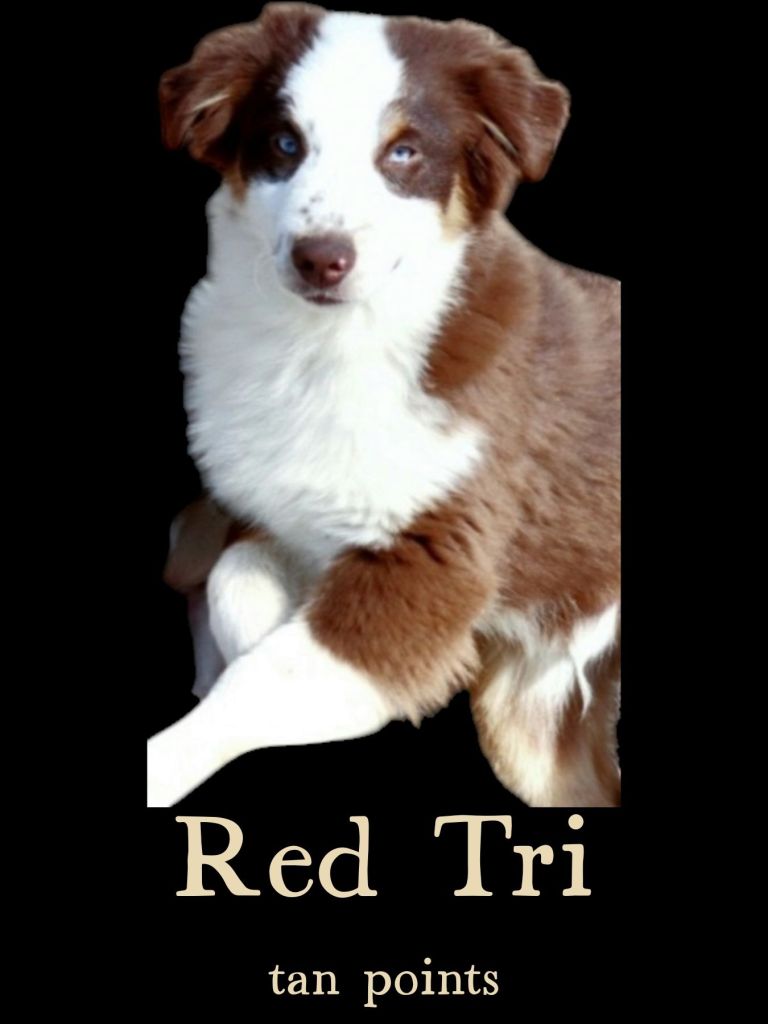
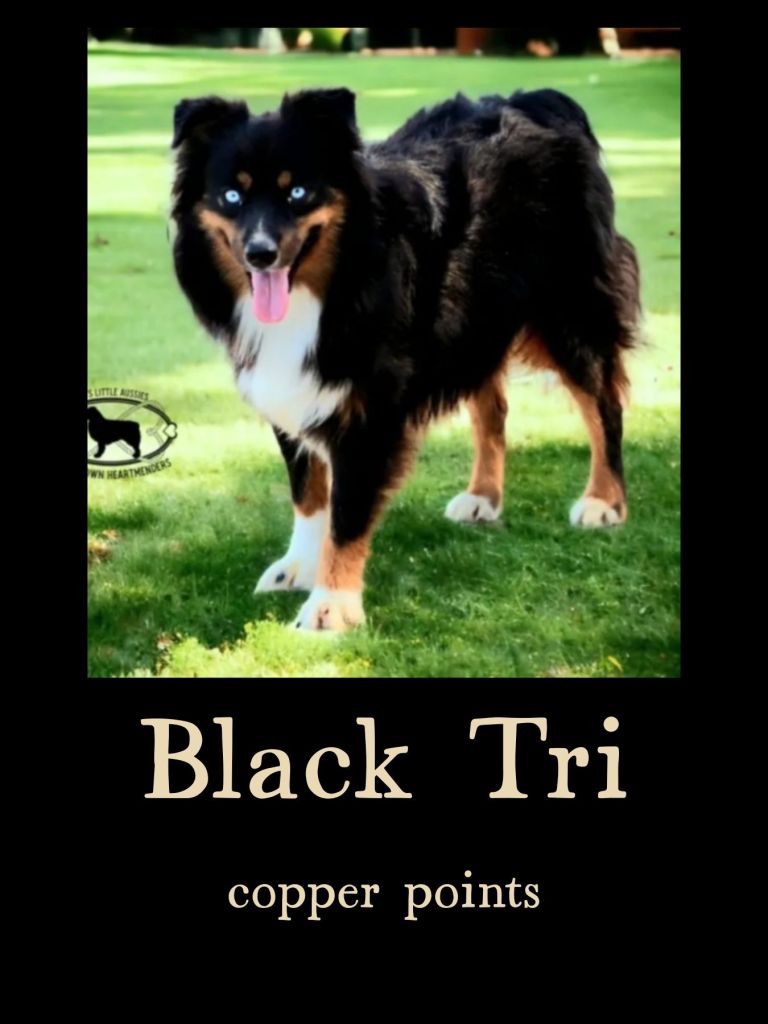
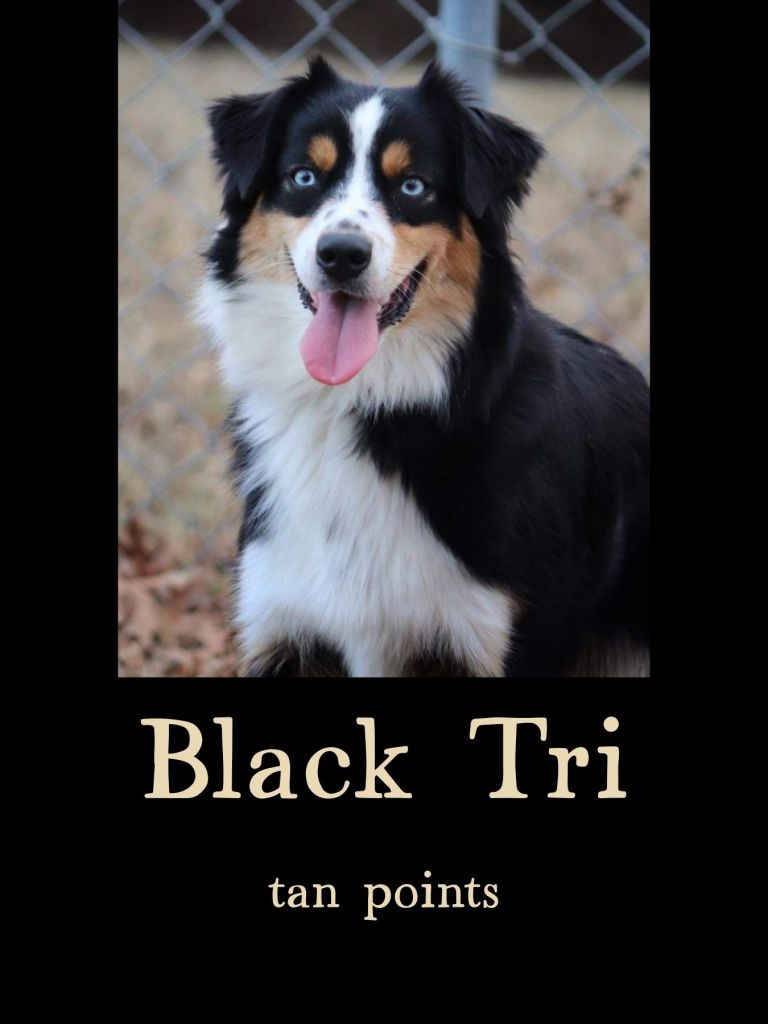
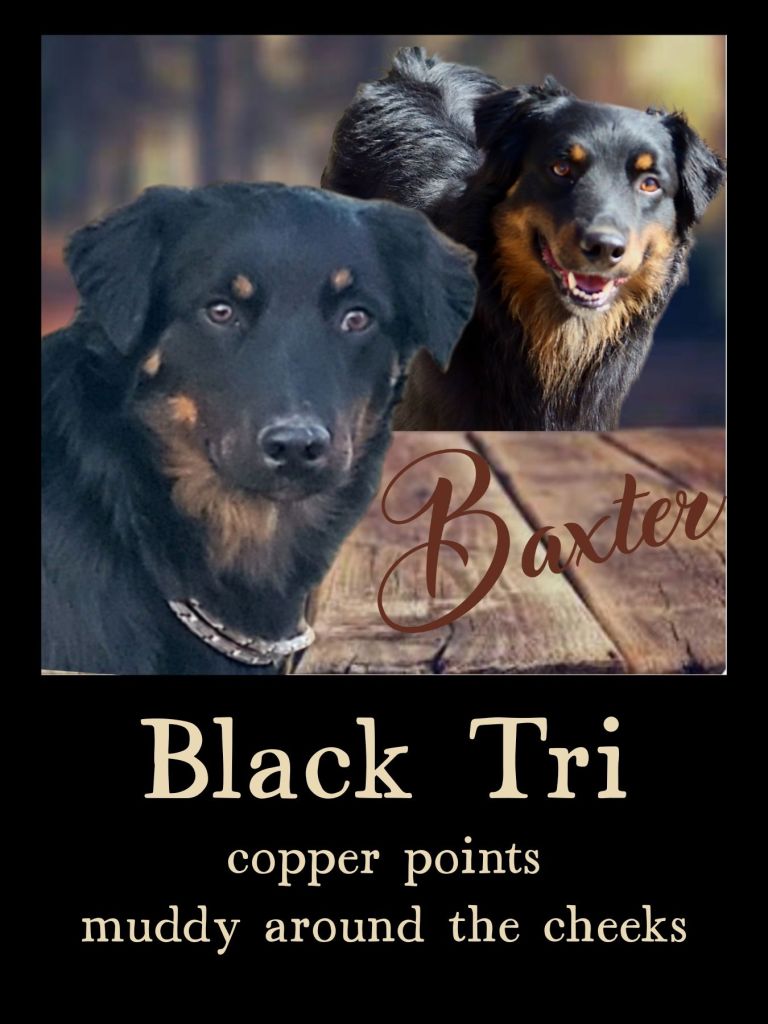
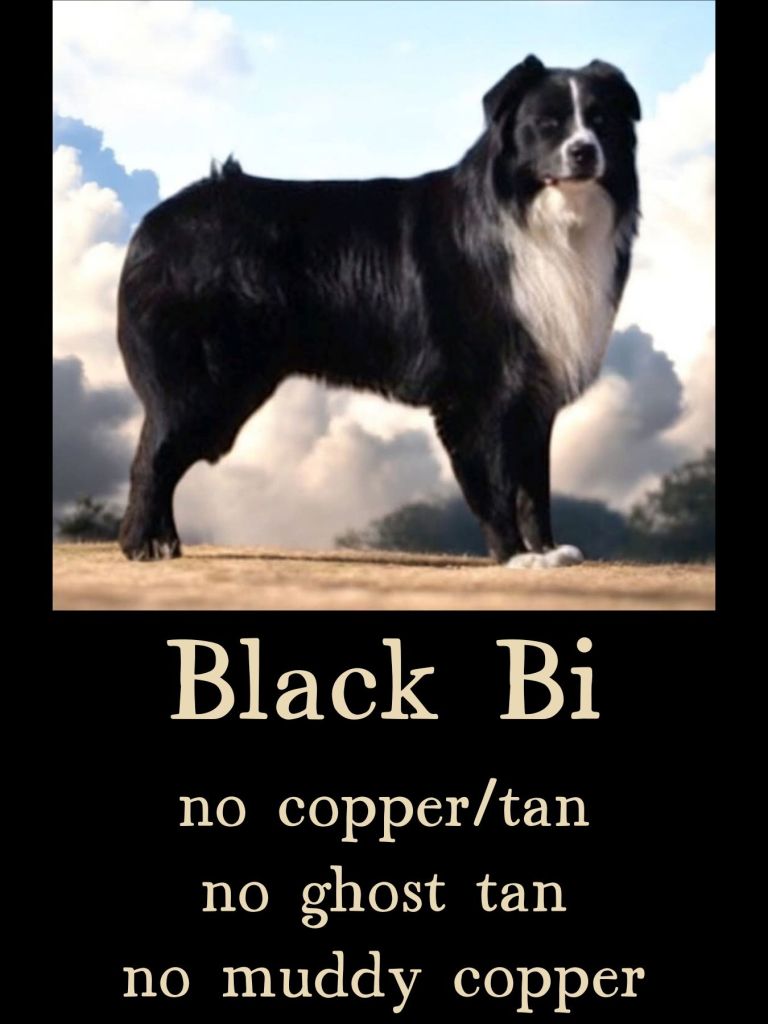
ASCA doesn’t provide a formal glossary entry stating, “Bi means ___, and tri means ___,” but its own Australian Shepherd color education makes the distinction clear through the examples it labels.
ASCA identifies “Blue Merle with Copper and White Trim” separately from “Blue Bi with White Trim.”
It follows the same pattern with the solid colors, labeling “Black Tri – Black, White, Copper” versus “Black Bi – Black and White,” and “Red Tri – Red, White, Copper” versus “Red Bi – Red and White.”
In ASCA’s own examples, copper is specifically identified as a separate trim component. Their solid-color examples distinguish “Tri” as Black/Red, White and Copper, while “Bi” is Black/Red and White. In the merle examples, ASCA distinguishes dogs “with Copper and White Trim” from those with white trim and no copper identified.
10. What are the Aussie eye colors?
Blue — Can range from a very pale, almost icy blue to a deeper or darker blue.
Brown — Can range from lighter brown to very deep, dark brown.
Amber — A warm golden, honey, or yellow-brown eye color. “Golden” is often used descriptively, while amber is the more specific color term.
Hazel — A blend of brown, amber, and sometimes greenish tones rather than one uniform eye color.
Marbled — Two or more colors appearing within the same iris. Australian Shepherd eyes may have areas of blue mixed with brown, amber, or other pigmentation. “Marbled” or “marbling” is commonly used in the breed. ALSO… Sectoral Heterochromia — Two colors occurring in distinct portions of the same iris. In Australian Shepherd terminology, this appearance is commonly described as a marbled eye.
Heterochromia — Two differently colored eyes. More specifically, complete heterochromia describes a dog with one eye of one color and the other eye another color, such as one blue eye and one brown eye.
🤎About Our Miniature Australian Shepherds
Miniature Australian Shepherds offer so much of what families love about the Aussie in a wonderfully versatile size. They’re intelligent, connected, athletic companions with enough substance for adventure while remaining manageable for everyday family life.
Here you’ll find quick answers about our Minis, their size and what families can expect when considering one.
Miniature Australian Shepherds → HERE
1. What is special about a Miniature Australian Shepherd?
For many families, the Mini hits a wonderful sweet spot.
They’re substantial enough to be active companions for walks, travel, outdoor adventures and family fun, while their smaller size can make them easier to manage in the home, vehicle and everyday life.
Most importantly, they’re still wonderfully Aussie—smart, devoted, playful, observant and eager to be part of what their people are doing.
2. What size is a Miniature Australian Shepherd?
Our Miniature Australian Shepherds generally fall between our smaller Toy Aussies and larger Standard Aussies.
We use expected adult size ranges to help families understand where a puppy is likely to mature, but height and weight are always estimates. Genetics don’t follow a ruler perfectly, and puppies can mature somewhat smaller or larger than anticipated.
Visit Height Info → HERE
3. Are Miniature Australian Shepherds less active than Standards?
Not necessarily. Smaller doesn’t automatically mean lower energy or lower drive.
Temperament and drive vary between individual dogs at every size. That’s why we place much more importance on the temperament of the individual puppy than assuming size alone tells us what that dog will be like to live with.
We intentionally breed toward low-to-medium drive Aussies with the ability to enjoy activity and settle when the activity is over.
Learn more about Our Temperament Philosophy → HERE
4. Are Miniature Australian Shepherds good family dogs?
They can be wonderful family companions. Their manageable size combined with the intelligence, loyalty, playfulness and connection of the Aussie makes Minis especially appealing to many families.
They’re still a herding breed, however, and families should expect Aussie instincts and be prepared to provide appropriate training, activity and boundaries.
5. Are your Miniature Australian Shepherds registered?
Yes. Our Miniature Australian Shepherd breeding dogs are registered through registries appropriate to their individual lineage.
Registration is one piece of the larger picture we consider when making breeding decisions alongside health, structure, movement, temperament and development.
Learn more about Why We Choose the Home → HERE
6. Why do you breed Miniature Australian Shepherds?
Because for many homes, they simply make sense.
We love the intelligence, connection and personality of the Australian Shepherd, and the Mini gives families those qualities in a size that can fit beautifully into everyday life.
We aren’t trying to make the Aussie something different.
We’re breeding the same kind of companion we value throughout our program—a really good dog, in a wonderfully livable size.
🤎About Our Toy & Australian Shepherds
Toy Australian Shepherds offer much of what families love about the Aussie in a smaller package. Here you’ll find quick answers about size, terminology and what to expect when considering one of our smaller Aussies.
Toy Australian Shepherds → HERE
1. What is special about a Toy Australian Shepherd?
Toy Aussies pack a remarkable amount of personality into a little dog. They’re intelligent, devoted, playful and often every bit as eager to participate in family life as their larger Aussie relatives. For families wanting Aussie character in a more compact size, they can be wonderful companions.
Why Toy Aussies Are So Special → HERE
2. What size is a Toy Australian Shepherd?
Toy Australian Shepherds are generally under 14 inches at the shoulder, while Mini Aussies fall into 14-18″ height. Because puppies are growing individuals, adult height and weight are always estimates rather than guarantees.
Visit Height Info → HERE
3. Are Toy different from Standard Aussies?
The biggest practical difference is size. Individual temperament, drive, coat and personality can vary at every size, which is why we look at the puppy in front of us rather than assuming size alone tells us what that dog will be like to live with.
4. Are Toy Australian Shepherds registered?
Our Toy Australian Shepherds are registered with registries that recognize the Toy Australian Shepherd. Registry eligibility depends on the individual dog’s lineage and registration.
5. What does “signature Toy Aussie style” mean?
For us, a Toy Aussie should still look and feel like an Aussie—not simply be tiny. We value balanced little dogs with recognizable Aussie type, beautiful expression, sound movement and the temperament to be wonderful family companions.
Size is part of what makes them Toys.
It isn’t the only thing we breed for.
🤎About Our Aussiedoodles
Aussiedoodles bring together qualities we love from the Australian Shepherd and Poodle, but coat, grooming, generation and individual temperament can vary considerably. Here you’ll find quick answers to some of the questions families ask most often when considering an Aussiedoodle.
Visit Aussiedoodles → HERE
Visit Aussiedoodles Thrive With Structure & Intentional Guidance→ HERE
1. Are Aussiedoodles good with kids?
They certainly can be. Aussiedoodles are often affectionate, playful and highly connected to their people. As with any puppy, individual temperament matters, and young dogs still need appropriate training and supervision as they learn how to live within a family.
2. Are Aussiedoodles hypoallergenic?
No dog is truly hypoallergenic, and we do not guarantee any of our Aussiedoodles to be hypoallergenic.
Aussiedoodles may shed less than an Australian Shepherd depending on coat genetics and generation, but coat, shedding and an individual’s allergic response to a dog can vary considerably.
Even puppies expected to have lower-shedding coats cannot be guaranteed not to shed or not to trigger allergies. Families with significant dog allergies should consider this carefully when deciding whether an Aussiedoodle is the right fit.
3. What do F1, F1b and Reverse F1b mean?
These terms describe the breeds and generations behind an Aussiedoodle. An F1 is an Australian Shepherd crossed with a Poodle. An F1b is an F1 Aussiedoodle bred back to a Poodle, while a Reverse F1b is an F1 Aussiedoodle bred back to an Australian Shepherd.
Each combination can influence coat, shedding, appearance and how strongly certain Aussie or Poodle traits may come through.
4. What will my Aussiedoodle’s coat be like?
Aussiedoodle coats can range from straighter and lightly wavy to fuller waves and curls. Coat type is influenced by genetics and generation, and even puppies within the same litter can develop differently as their adult coats come in.
5. How much grooming does an Aussiedoodle need?
Aussiedoodles require regular coat care. Longer and curlier coats generally need frequent brushing and combing all the way to the skin, along with professional grooming on a consistent schedule. Keeping the coat shorter can make everyday maintenance considerably easier.
6. How can I maintain a longer Aussiedoodle coat?
Brush and comb thoroughly and consistently, paying particular attention to friction areas such as behind the ears, under the collar, legs, belly and where the legs meet the body.
A comb should be able to move through the coat to the skin—brushing only the surface can leave tangles underneath.
Long, fluffy doodle coats are beautiful, but that beautiful coat comes with maintenance.
Between Grooming Appointments → HERE
🤎Health & Veterinary Care
The health of our dogs and puppies is an important part of every breeding and raising decision we make. Here you’ll find quick answers about genetic testing, veterinary care, vaccinations and the health information that accompanies your puppy.
Our Puppy Health Approach → HERE
1. Do you genetically health test your parent dogs?
Yes. Our breeding dogs receive genetic health testing appropriate to their breed and lineage with Embark. We use those results as one part of the larger picture when making breeding decisions, alongside health, development, temperament, structure and the individual dog.
We test for Neuroaxonal Dystrophy (NAD) with Gensol Diagnostics.
We test our merle allele lengths with UC Davis.
Health-testing documentation is available to serious prospective families upon request.
Why We Choose Embark →
Learn about the accuracy and reliability behind their testing.
2. Can I see your parent dogs’ health-testing results?
Yes. Health-testing documentation is available to serious prospective families upon request. We don’t publish our complete testing records publicly, but we’re happy to share and discuss relevant health information with families who are genuinely considering one of our puppies.
3. Do your puppies receive veterinary care before going home?
Yes. Our puppies receive age-appropriate preventative care and veterinary care as needed while they’re with us. Before homecoming, families receive information about the care their individual puppy has received so they can continue care with their own veterinarian.
4. Are your puppies vaccinated?
Yes. Puppies receive age-appropriate vaccinations while they’re with us. Because the puppy vaccination series continues over several months, your puppy’s records will show what has already been given and what your veterinarian will need to continue after homecoming.
Parvovirus Awareness →HERE
5. Are your puppies dewormed?
Yes. Parasite prevention and deworming are part of our puppy-care program. Puppies receive age-appropriate treatment while they’re with us, and those treatments are documented for their families.
Why Do Puppy Develop Parasites → HERE
6. What health information comes home with my puppy?
Your puppy goes home with a record of the vaccinations, deworming and other preventative or veterinary care they have received while with us. We encourage you to take those records to your veterinarian so your puppy’s ongoing care can continue from there.
7. Does my puppy need to see my veterinarian after coming home?
Yes. We ask families to establish care with their own veterinarian shortly after homecoming and have their puppy examined within the timeframe outlined in our agreement.
This gives your veterinarian an opportunity to meet your puppy, review their records and establish the ongoing care plan you’ll follow together.
8. What is MDR1?
MDR1 is a genetic variant that can affect how some dogs process certain medications. It occurs in Australian Shepherds and other herding breeds.
Because medication sensitivity can have important implications, we provide families with information about MDR1 and encourage them to make sure their veterinarian is aware of their puppy’s status.
Learn more about MDR1 → HERE
9. Do your puppies come with a health guarantee?
Yes. Our puppies are placed with a written agreement that includes our health provisions and explains the responsibilities of both us and the puppy’s family.
Because the details matter, we encourage families to read the complete agreement rather than relying on a shortened FAQ description.
Read Our Health Guarantee & Agreement → HERE
10. Can you guarantee that a puppy will never develop a health problem?
No breeder can honestly guarantee that a living animal will never experience illness or develop a health condition during its lifetime.
What we can do is make thoughtful breeding decisions, utilize the health information available to us, provide appropriate care while our puppies are here, and be transparent with our families about what we know.
Our goal isn’t to promise perfection. It’s to make informed choices with the health of the next generation always in mind.
🤎Applying, Choosing & Bringing Your Puppy Home
From first interest to homecoming, we want the process of finding and bringing home your puppy to feel clear and comfortable. Here you’ll find quick answers about our application, Puppy Watch List, retainers, payment, choosing your puppy, pickup and what comes home with them.
For the heart behind how we help families and puppies come together, visit Matching Over a Birth-Order Waitlist.
1. How do I apply for a puppy?
Begin by completing our Puppy Application. It helps us learn a little about your home, lifestyle and what you’re hoping for in a companion so we can begin the conversation about finding the right puppy for your family.
Complete Our Puppy Application → HERE
About the Application Process → HERE
2. What is the Puppy Watch List?
Our Puppy Watch List lets you tell us what you’re hoping for without requiring a final puppy decision too early.
And yes—you can tell us which puppy has your heart. We’ll place your name with that puppy on our Watch List and reconnect as the puppy grows so we can revisit your choice with more information before the match becomes final.
Complete Our Puppy Watchlist → HERE
Learn About Our Matching Philosophy → HERE
3. Do you offer breeding rights?
No. Our puppies are placed as companion-only and are not sold with breeding rights.
Our focus is raising dogs for family homes, and our breeding dogs remain part of the breeding program we carefully develop and manage here.
Learn more about Why We Choose the Home →HERE
4. When do I choose my puppy?
We begin accepting retainers on puppies at 6 weeks of age.
Families are welcome to tell us which puppy has caught their heart before then, and our Puppy Watch List gives us a way to note that interest without requiring a final commitment too early.
As the puppies grow, we’re watching much more than color, markings or the first personality glimpses we see as newborns.
We’re beginning to learn about temperament, confidence, energy, engagement and the little characteristics that make each puppy an individual.
At around 6 weeks, families may begin moving forward with a puppy and placing a retainer. That doesn’t mean we stop paying attention. We’ll continue learning about your puppy as they grow and sharing what we’re seeing with you.
Our goal isn’t to hold puppies until we can predict exactly who they’ll become—we can’t. It’s simply to give both the puppy and the family more information than we had at birth before making such an important choice.
Learn more about Our Puppy Matching Philosophy → HERE
5. Do you require a signed agreement?
Yes. Our puppies are placed with a written agreement so expectations, health provisions and responsibilities are clear for both our family and yours.
We encourage families to read it carefully and ask questions before homecoming.
6. What is a retainer?
A retainer is the payment that secures your puppy once a match has been made and you’re ready to move forward. Retainer terms, including refund provisions, are explained before payment and in our agreement.
We don’t use money to hold a family to a puppy. We use the retainer to hold the puppy for a family who’s already chosen to stay.
Retainer & Bill of Sale Policies → HERE
7. What payment methods do you accept?
Available payment options are discussed during the reservation process. Any remaining balance and payment requirements will be clearly communicated before your puppy’s scheduled homecoming.
8. Can we visit the Farmstead to meet the puppies?
For the health and safety of our dogs and puppies, we don’t offer general Farmstead visits or public puppy browsing.
We’ll provide photos, updates and conversation throughout the process so families can get to know the puppies they’re considering.
9. Can I meet my puppy before deciding?
Because we don’t offer Farmstead visits, our matching process is built around communication, photos, updates and what we’ve learned from living with and observing each puppy.
We’re happy to talk with you about the individual puppies you’re considering and help you understand the differences we’re seeing as they develop.
10. Do you place puppies outside of Texas?
Yes. Families are welcome to travel to Texas for their puppy. Our puppies are placed through in-person homecomings rather than being shipped to their families.
11. Do you offer puppy transport?
We don’t offer ground transport or send our puppies with flight nannies. Families traveling by air may arrange to meet us at DFW or Love Field for their puppy’s homecoming.
Learn More About Traveling Home With Your Puppy → HERE
12. What comes home with my puppy?
Your puppy goes home with a thoughtfully prepared bag of essentials, along with their individual care and health information to help you begin life together confidently.
For families who would enjoy making homecoming a little more special, we also offer optional Homecoming Comforts & Keepsakes designed to bring familiarity to those first days and preserve some of the little memories from puppyhood.
Your puppy goes home with → HERE
Explore Homecoming & Keepsakes → HERE
13. Are your puppies microchipped?
Yes. Our puppies are microchipped before going home, and families receive the information needed for their puppy’s identification and records.
Our Microchip Policy → HERE
14. What should I bring when picking up my puppy?
You don’t need to arrive with half the pet store. We’ll provide a simple list before homecoming with anything we recommend bringing for your particular trip.
The most important thing is a safe plan for traveling home with your puppy.
15. What are the Heartmender Foundations?
Heartmender Foundations are the age-appropriate experiences, early learning and everyday-life skills we begin while your puppy is still with us. Depending on a puppy’s age and readiness, that may include confidence building, leash introduction, settling, crate exposure, handling, potty foundations, car rides and other early companion skills.
Explore The Heartmender Foundations → HERE
16. Will my puppy be potty trained when they come home?
No young puppy should be considered fully house-trained. We begin potty foundations while puppies are with us so they have an understanding to build upon, but accidents and continued training should be expected after moving into a new home.
Learn About Foundations, Not Finished Puppies → HERE
17. What should I expect during the first few days at home?
Your puppy has just experienced an enormous change, so we encourage families to keep those first days relatively simple. Give your puppy time to learn your people, home, potty routine, sleeping arrangements and everyday rhythm before expecting too much too quickly.
Your Go-Home information will help guide you through that transition.
18. Can I contact you after my puppy comes home?
Absolutely. Homecoming doesn’t end our interest in the puppy we’ve raised. We love updates, we’re here when families have questions, and we hope you’ll continue sharing pieces of your dog’s life with us for years to come.
Your puppy leaves our home—but never our story.
19. Do you offer returning-family or referral rewards?
Yes. Once you’re part of the God’s Little Aussies family, we love welcoming you back—and we appreciate when our families send someone they love our way.
Returning GLA families receive a $500 Loyalty Credit toward a future puppy, and when a family you refer brings home one of our puppies, we send you a $100 Thank You Reward.
Learn About Our Family Loyalty & Referral Rewards → HERE
20. What if I can no longer keep my dog?
Life can change in ways none of us expect. If at any point you are no longer able to keep a dog from God’s Little Aussies, our agreement requires that the dog be returned to us and not independently rehomed, sold, surrendered or transferred to another person or organization.
We make this commitment because our responsibility to the dogs we bring into the world doesn’t end when they leave our home. We want every one of them to remain safe and thoughtfully placed throughout their lifetime.
The complete terms of our return policy are outlined in our Puppy Agreement.
If Life Takes A Turn → HERE
21. Why are your puppies priced the way they are?
Our pricing reflects the care and time we invest in every puppy we raise. From thoughtful breeding decisions and veterinary care to quality nutrition, intentional socialization, and the additional time many of our puppies spend growing here with us, our priority is doing right by each puppy entrusted to our care.
Most puppies are offered according to our established pricing. Occasionally, however, an individual puppy may be designated Farmstead Select and priced separately. These puppies aren’t considered “better” than the others. They simply have a combination of qualities that makes them unique to us—perhaps pedigree, structure, temperament, markings, expression, or simply the way everything came together.